Where: Tolga Bat Hospital in the Atherton Tablelands
 Graeme and I have both worked with bats in Australia and New Zealand so I was very keen to check out the Tolga Bat Hospital. During our visit I was pleasantly surprised to see such great facilities for care and rehabilitation of injured or orphaned bats.
Bats have got a bad rap in the eye of the public: they are considered pests by fruit farmers or when they roost near people because of the noise and smell, and they are known to carry diseases that have the potential to infect humans such as Lyssavirus and Hendra virus in Australia and Ebola virus and 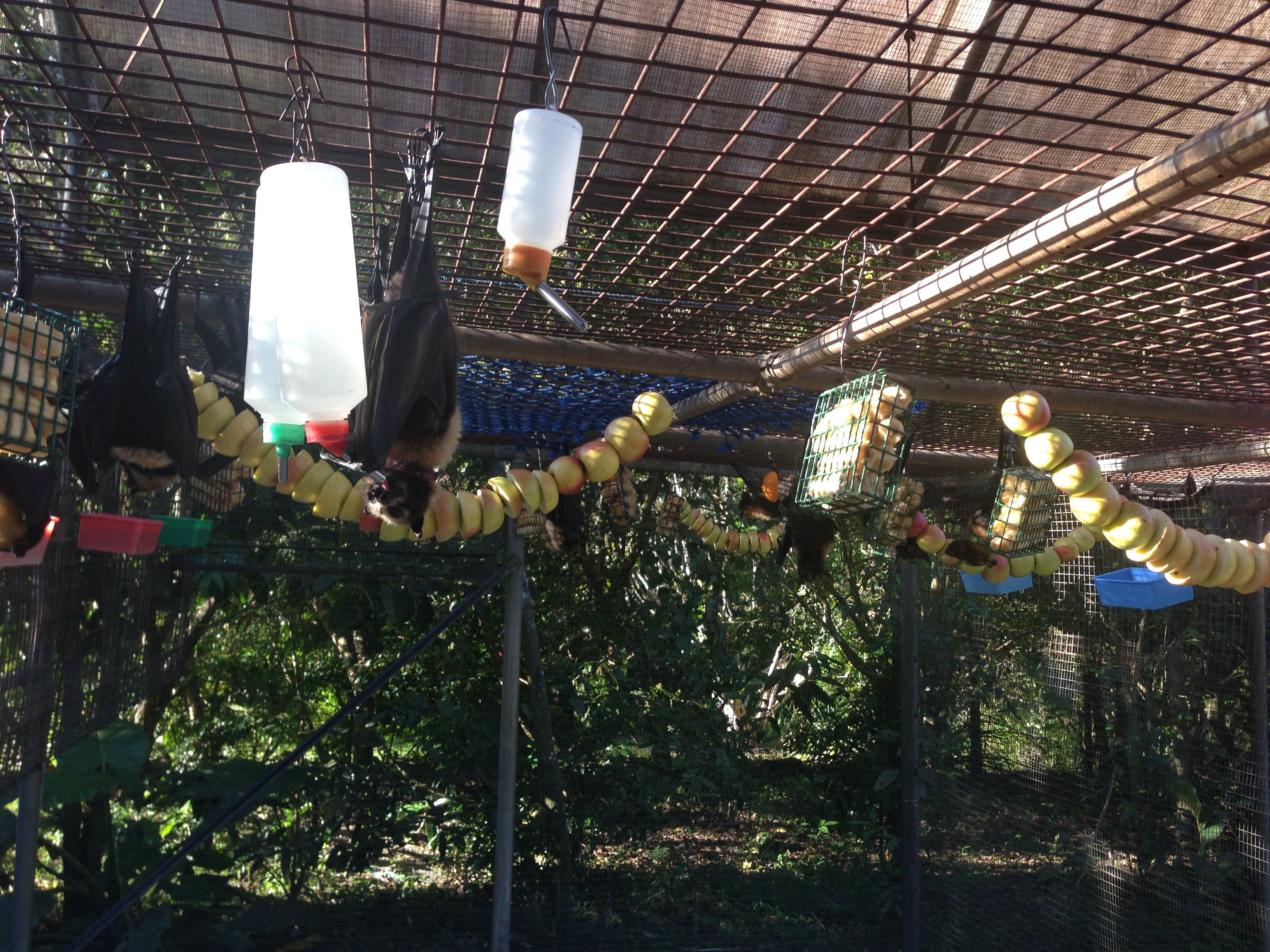 Nipah virus overseas. But I am here to tell you that bats are a very important part of any ecosystem because they aid suppression of insect populations, dispersal of seeds, pollination and recycling of nutrients in the ecosystem. If you ever get to meet a bat you will hopefully see they are not as scary as you may think and may even begin to appreciate them as cute little creatures.
Many bat species in Australia are in decline and this is solely due to human activity. Destruction of their habitat is the number one threat to bats, and as they move into human populated areas they are vulnerable to shooting by fruit farmers, getting caught in barbed wire fencing or inappropriate fruit tree netting 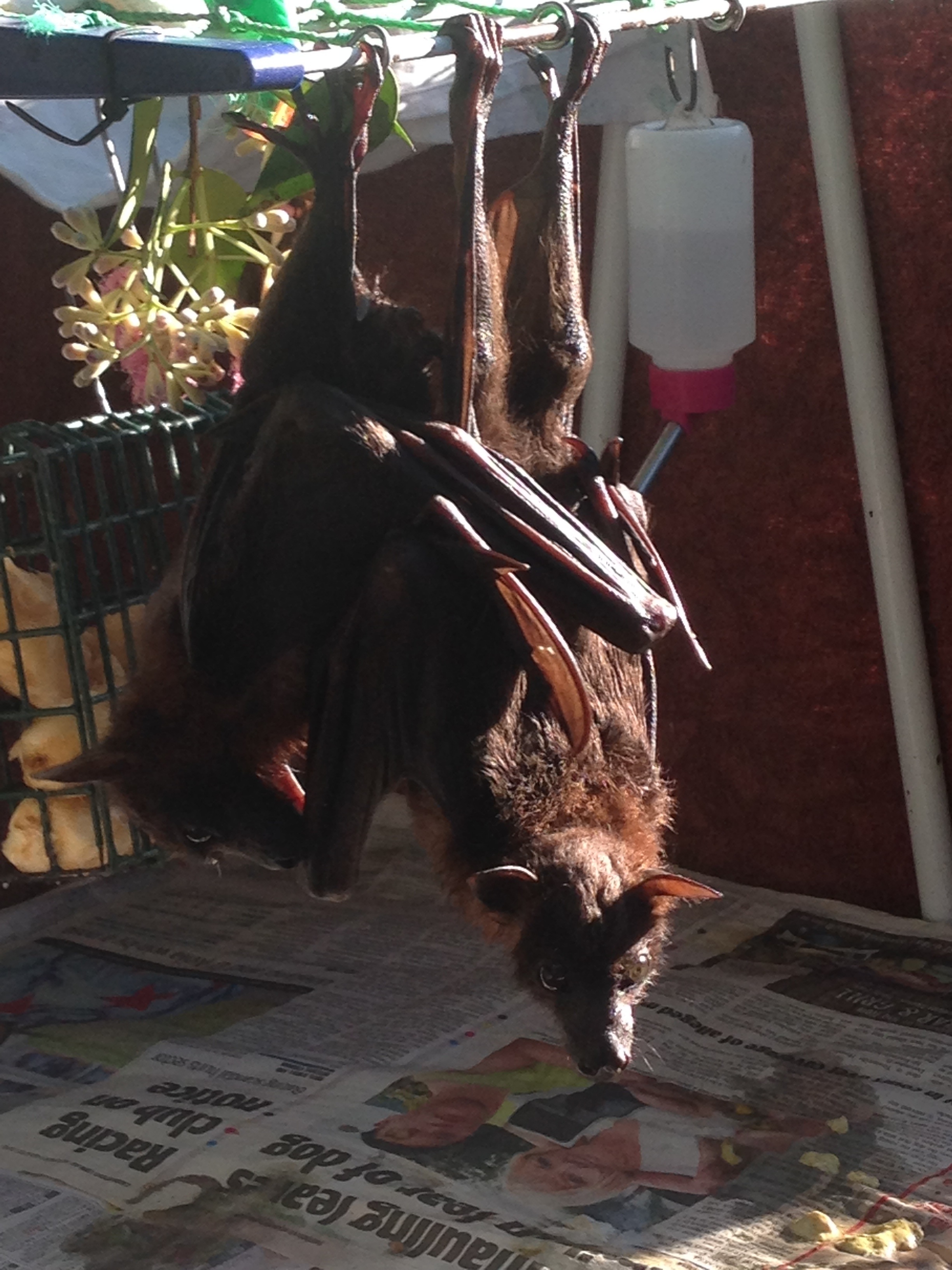 and electrocution. The hospital at Tolga cares for 1000’s of orphaned and injured bats each year (I can’t remember the exact number but was definitely A LOT!) with the aim of releasing them back into the wild.
As for the diseases found in bats in Australia (Australian Bat Lyssavirus and Hendra virus) that have the potential to infect humans, there is absolutely no need to go around culling/killing bats in order to minimise transmission to humans. Australian Bat Lyssavirus has similar properties to the Rabies virus and therefore vaccination with Rabies vaccine protects humans from infection with Lyssavirus. All people who work with bats are required to have the Rabies vaccine (as Graeme and I have). As for Hendra virus, the bat first needs to infect a horse and only then are humans able to become infected. Humans cannot be infected with the  virus from coming into contact with a bat. Besides, there is now a Hendra virus vaccine for horses so the risk of transmission from horses to humans is minimal in a vaccinated horse (be wary of those who have the opinion that the vaccination is dangerous in horses – there is no actual evidence to support this. Opinion is very different to evidence – don’t get me started!).
We were given a tour of the facilities at the hospital and got to meet many of the current patients including this cute juvenile Spectacled flying fox who tried to steal my hat!


Love your posts Serena! It’s not the bats’ fault!! And my understanding is that it is destruction of habitat that results in the bats moving to alternative locations that bring them into contact with animals they would not usually meet (eg. pig farms with Nipah virus) to bring about unusual new routes of virus transmission. We loved seeing the massive ‘flocks’ of bats flying over Darwin every evening – looking like a massive flock of birds, but eerily completely silent!!
LikeLike