In search of the striped possum

Standard

Another one on the hit list, the striped possum, a tropical species found only in far north Queensland and PNG with striking black and white stripes. As soon as we reached Townsville, the southern most part of their distribution, we were on the lookout.

Graeme spotted two of them, one in the Atherton Tablelands and one in the Daintree, while spotlighting. Striped possums have a unique, elongated 4th finger to scratch Striped possum Eachum PS DSCN1579out bugs from rotting timber which can often make an obvious scratching noise. Graeme heard this noise one night and followed it deep into the bush until he found the culprit way up in a tree!

Unfortunately for me I was too tired to spotlight those nights and I missed them. But my rule for this trip is that if I don’t see the animal it doesn’t count, so our search was not over yet.

This species is supposedly common in the Cairns Botanical Gardens, but our spotlighting was unsuccessful. Cape York didn’t provide me with a viewing either. So on our way from Cape York to western Qld we went back to the Atherton Tableland for the third time and stayed at a birdwatching lodge (nerds!) where we had it on good authority that there was a resident striped possum.

The Kingfisher Lodge has an amazing array of wildlife on their property including the green ringtail possum (also a first for us) and many bird species. And as luck would have it we found this beautiful striped possum foraging in a tree. Striped possum…TICK!Stripped possum cropped IMG_9690

CAPE YORK #3: In search of the cuscus

Standard

Where: Kutini-Payamu (Iron range NP)

Hanging out with: Jenny and Euan and kids (again J)

The Daintree National Parks seems to be Queensland’s most famous, but there are so many other National Parks out there that have diverse habitats with an amazing array of wildlife. Iron Range NP is one of those parks. It is one of the largest remaining areas of lowland rainforest to be found in Australia and was once connected to Paupa New Guinea. Due to it’s topography the lowland rainforest has been retained and many of the animals and plants that occur are only found here and in PNG, so a really unique spot on Cape York as a lover of nature. Once again we donned the head torches and went out spotlighting in search of some of the unique critters in the area.

IMG_9372Our first two nights were spent on Chilli beach and we were treated to the spectacular sight of the metallic starling murmeration (this is a new word for us as well – it means a flock of starlings). At dusk, after a day of foraging, the starlings come together into one giant flock and fly around in beautiful patterns over their roosting site for about 10-15mins before finally settling on the trees to sleep for the night. It was breath-taking to watch!

The next two nights we camped in the heart of the rainforest and we had a number of animals on our list to see. The green python was high on our hit list because it would have to be one the most beautiful of all snakes. Euan found this one for us wrapped on a tree waiting for its prey.

Green python PS IMG_9451Cuscus (not to be confused with couscous) are a type of possum and two species can be found inCommon cuscus IMG_9446 cropped PS Australia: spotted cuscus and the common cuscus. We found this beauty only 50 metres from our campsite! In total we found three common cuscus but the unfortunately the spotted cuscus eluded us.

CAPE YORK #2: The Tip

Standard

Heading up to the Palm cockatoo IMG_9087Tip of Cape York we had a few nights at Loyalty Beach with magnificent views of the Gulf of Carpentaria and the Torres Straight. A beautiful palm cockatoo came for a visit. We also couldn’t resist the opportunity to take a scenic helicopter flight over the tip to get an aerial view of the area and spot many crocodiles from the air.

View of The Tip from the air

View of The Tip from the air

We took a ferry to Thursday Island for a day tour, which of course included a drink at the most northern Australian pub. The turquoise waters were just so inviting but unfortunately too many crocs lurking in the water.

THursday Is pano DSCN2350

Thursday Island

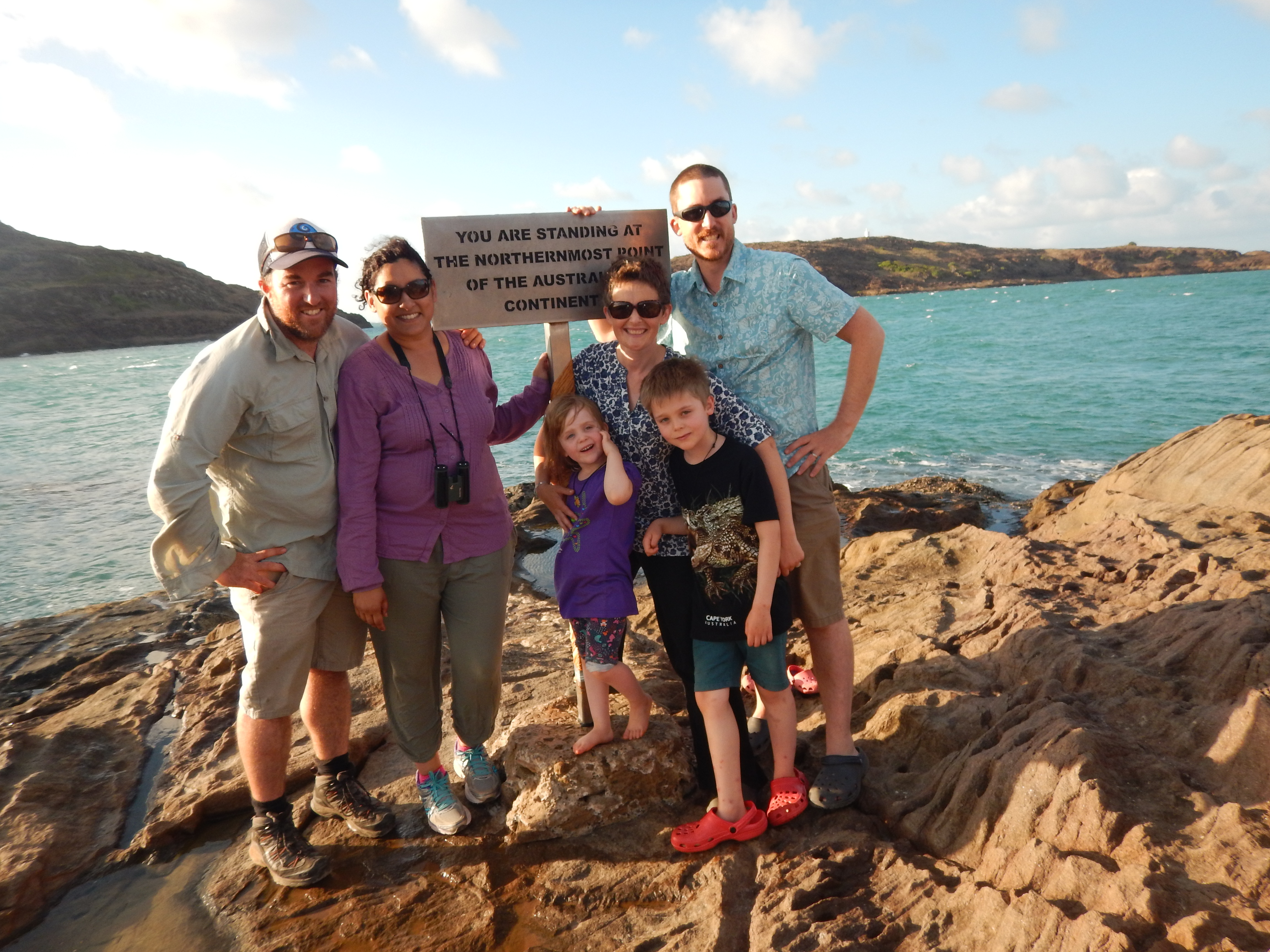
We made the move to Punsand Beach, the northern-most campground in Australia and to our surprise Jenny and Euan arrived at the same time after changing their schedule. This made for a wonderful evening at the Tip of Australia. We took a picnic dinner and some celebratory bubbles to have while we watched the sunset. Graeme through a line in (but didn’t catch anything). It was a magical evening made even better by sharing the experience with our friends.

DSCN2378 DSCN2385DSCN2415


CAPE YORK #1: Joining the “Big Roo Count”

Standard

DSCN2246Where: Heathlands Reserve, Fruitbat Falls, Captain Billy’s Landing.

Hanging out with: Jenny Martin Ritchie and Euan Ritchie and kids

Connection: We went to Melb Uni with Jenny – she was working on her PhD while Graeme and I were doing our Honours research in the Zoology Department.

Captain Billy's Landing

Captain Billy’s Landing

When I say “Joining the Big Roo Count” what I really mean is encouraging Jenny and Euan to take a day off work and go exploring. And that’s exactly what we did.

Exploring a bat cave. We later found out that crocs like to rest in here...oops!

Exploring a bat cave. We later found out that crocs like to rest in here…oops!

First, an attempt at driving on the original Telegraph track, which was short-lived because we wanted to save our cars from the damage that the huge ruts could cause. Then a delightful and refreshing swim at Fruitbat Falls followed by some beachcombing at Captain Billy’s Landing.

IMG_8866

Bat’s in the bat cave

The following day we thought we’d better help them out with some work. The “Big Roo Count” being conducted by Euan and Jenny is a follow-up from Euan’s PhD research a decade ago. Their aim is to see how the populations of kangaroos, wallaroos and wallabies in the tropics have changed since their surveys 10 years ago. After a super crowd-funding effort they were able to raise enough funds to re-survey the Qld sites over four months, so off they went with their two kids in tow!

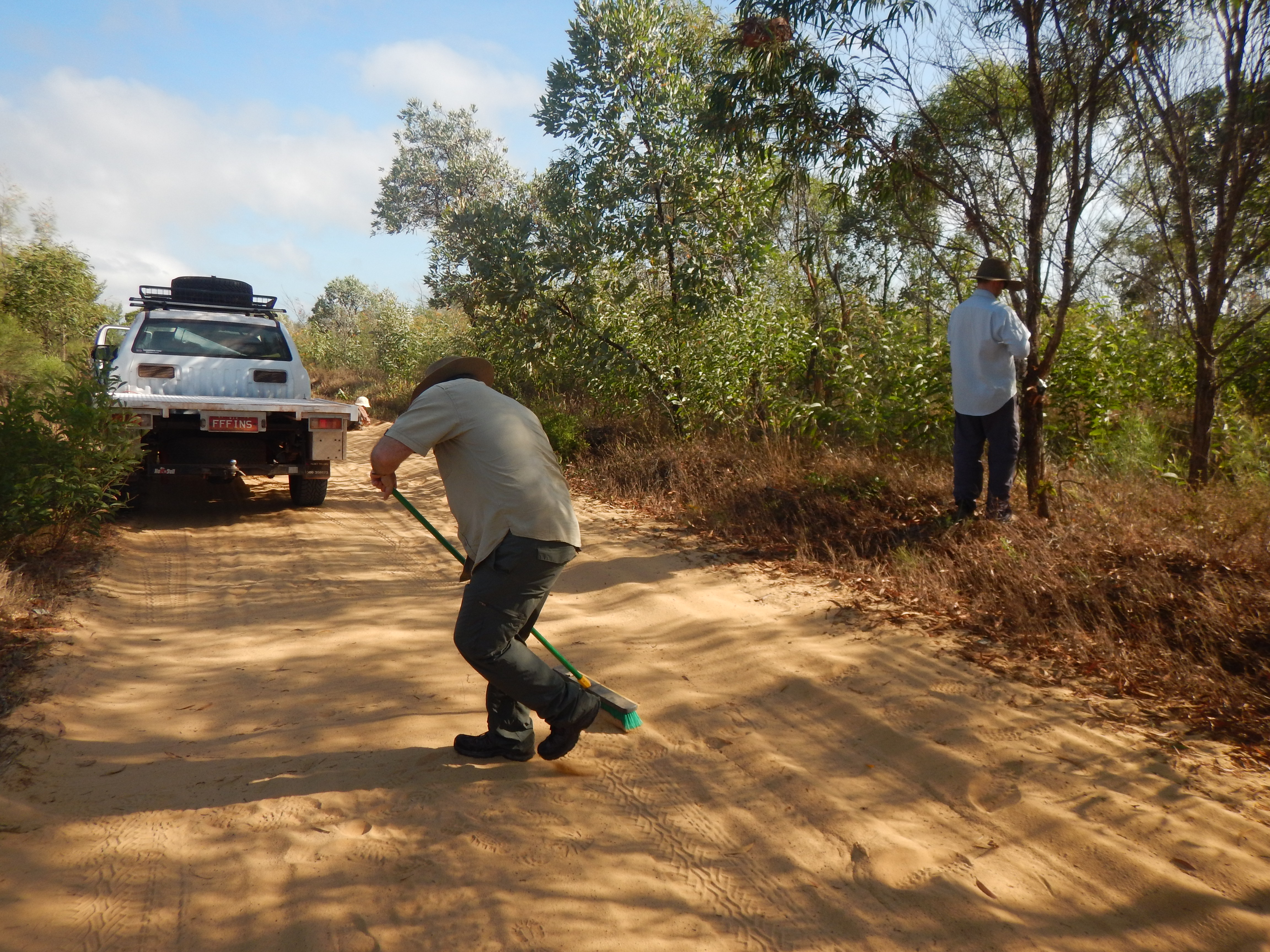
This time, they were very excited to be able to use modern technology such as camera traps to enhance their surveys and collect more data.  Graeme assisted Euan with setting the camera traps and sweeping an area of sand in front of the camera to detect fresh footprints of animals.

Men at work

Men at work

A dollop of a mixture consisting of peanut butter, fish sauce, honey and a few other odorous ingredients was placed in front of the camera in order to attract nearby animals.

Burrowing frog

Burrowing frog

I on the other hand had the very important job of keeping the kids occupied. We did this by building fake crocodile nests in the sand (and uncovering a burrowing frog in the process!), licking the delicious nectar from nature’s lollipop flowers (aka bush tucker or ‘honey floss’), building nests for birds or marsupials and decorating the shrubs like Christmas trees with natural decorations.

After our morning of “work” we left the Ritchies and continued our journey north with plans to meet up with them again at Iron Range NP the following week.

A COUPLE OF COINCIDENCES

Standard

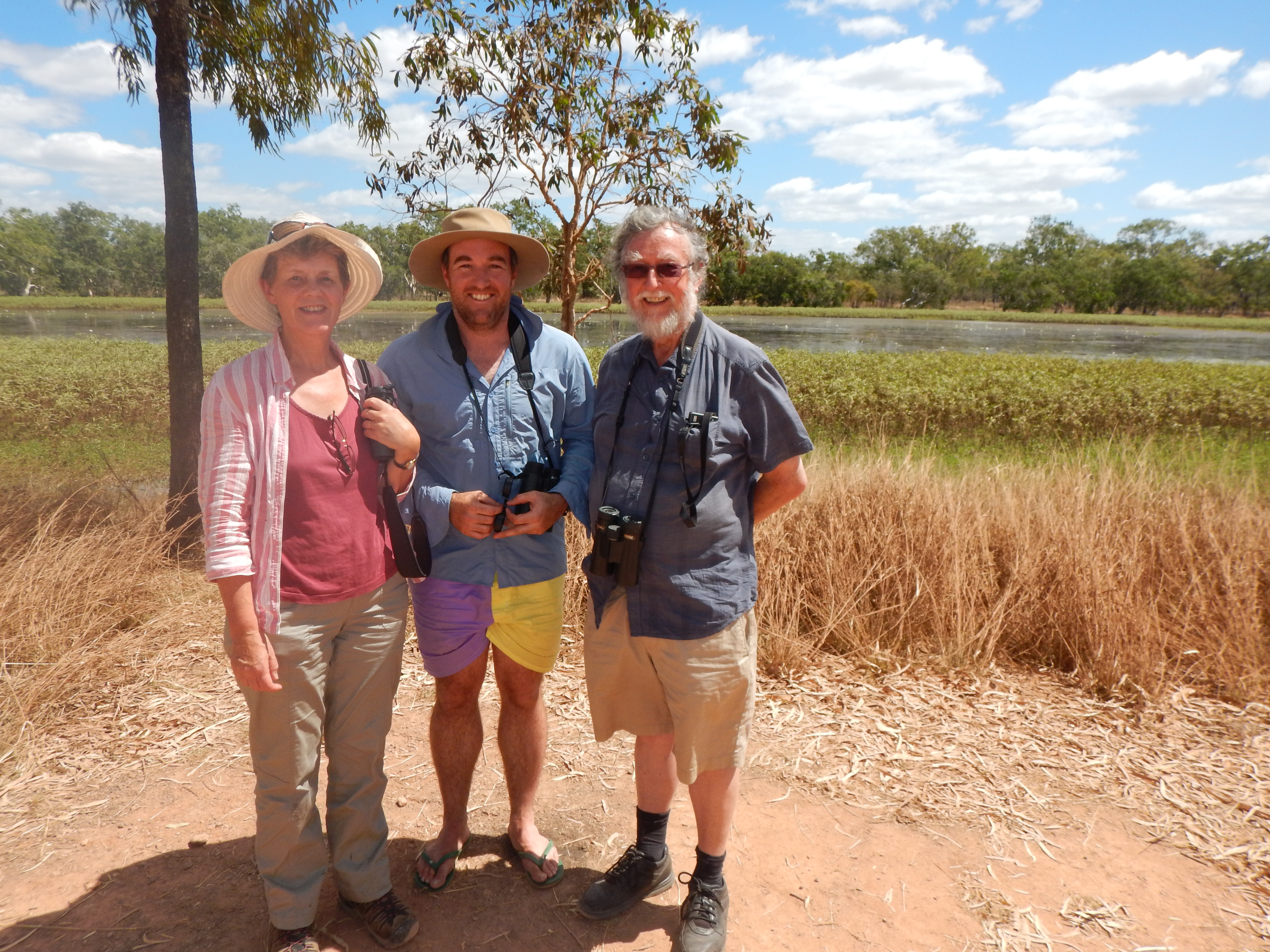
Standing on the shore of a very remote lagoon in the middle of Lakefield NP at the southern end of Cape York Peninsula, we were rather put off when a car pulled up and a tourist stood in front of us blocking our view of the crocodile swimming across the pond. Instead of being rude, Graeme asked them where they were from to which they answered Adelaide. In an instant Graeme recognised the voice and face and said “Bill?”. Bill Breed DSCN2165Graeme and Bill were co-authors on a paper on reproduction in southern hairy-nosed wombats many years ago. Bill Breed, a retired professor from the University of Adelaide whom we hadn’t seen in 10 years, was on a short bird-watching trip from Cairns to Lakefield NP and back again. We were on our way north, they were on their way south. What a random, remote place to unexpectedly catch up with an old colleague.

The next day we had a long drive. We were heading from Lakefield to Bramwell Station in the hope of catching up with our friends Jen Martin and Euan Ritchie who were half-way through their “Big Roo Count” fieldtrip on the York Peninsula. With no way of contacting them, we checked their SPOTME tracker and saw that they were at Bramwell Station. Banking on the fact that they spend several days at each field site, we decided to head up to the station to find them.

You know those times that a difference of 1 minute would have made a major difference in the outcome of an event. Well this was one of them. We had a 6-hour drive to Bramwell,  which turned into an 8-hour drive because of our numerous random stops to look at wildlife (like Brolgas!), drink coffee by a river and to refuel at roadhouses. We stopped briefly at Bramwell roadhouse 11836739_10206509184281589_43350002259446640_nto fill our tank before driving the last 10km to the Station. As I was paying for the fuel I noticed a familiar face – Jen – they had stopped at the roadhouse for 30 seconds just to dump some rubbish. Was it fate? I don’t really know. But it was mighty lucky as they were on their way to their next field site at Heathland Reserve. Happily, we followed them to their next destination.

Adventures on the Cape to be continued…

In search of the cassowary

Standard

Some might Birdwatching IMG_8499 croppedwonder about our obsession with seeing a cassowary in the wild. It all started last year when we visited the Daintree for our friends’ Cara and Andy’s wedding. “You’ll definitely see a cassowary in the Daintree” people said. Not true. Although it seemed that everybody else at that wedding had seen a cassowary at some point during their holiday.

So during our trip this year, we tried every area where cassowaries are known to be commonly sighted. Starting from the southern end of their distribution, we drove along the “Cassowary trail” in the Mission beach area and even walked along a rainforest trail that has a “Cassowary garden” full of trees bearing their favourite fruits. One would expect to see a cassowary on a cassowary trail, but we did not. We had been forewarned however not to get our hopes up at Mission beach, as cyclone Yasi had greatly effected the cassowary population in this area and numbers had definitely decreased.

We traveled further north to Etty Bay. A cassowary and his chick (yes, males rear the chicks while mum just lays the egg then runs), are known to frequent this beach EVERY SINGLE DAY. We arrived in the afternoon to find that there was no room in the inn (or caravan park) for us. So on we went.

“Never fear”, our advisors would say, “the best place to see them is in the Daintree!” Do I really need to remind you about our lack of cassowary sightings in the Daintree last year?

We were losing hope. We had started to believe that the cassowary was a mythical creature. People were just putting up those silly “recent cassowary crossing here” signs just to annoy us. We made a deal that we would not leave the Daintree until we saw one.

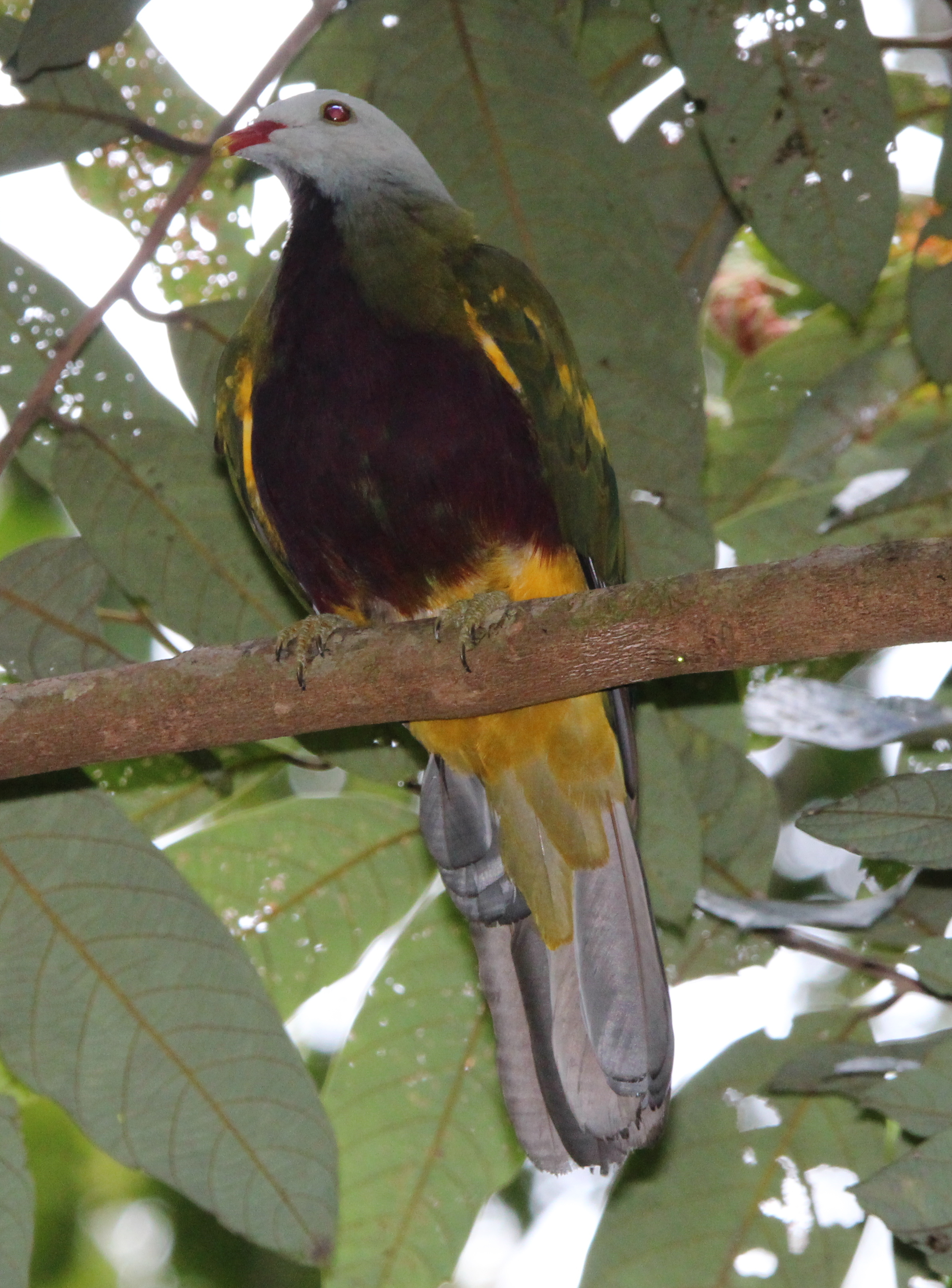
We walked along the JindalbaWompoo IMG_8489 boardwalk keeping our eyes peeled for cassowaries, and instead we found all kinds of new birds that we had never seen before. We sat on a little a bird-watching deck and found Wompoo (pictured), rufous fantails and many honeyeaters. Suddenly there was a loud noise behind us…and there he was…Mr Cassowary and his chick had found us!

We had a wonderful 30 seconds of watching him and his little chick scratching around in the earth when a loud helicopter flew over and frightened them away. At least we now know that they are real.

A Trio of Northerns: in search of Northern bettongs, bandicoots and quolls

Standard

We had some time to kill while waiting for a package of ours to arrive in Cairns so we decided to head back to the Atherton Tablelands to find some animals that we didn’t see the first time. On some very reliable advice, we camped at Davies creek NP to find the trio of northerns: northern bettong, northern quoll, and northern brown bandicoot.

Giant white-tailed rat

During our night-time spotlighting we only managed to see a northern brown bandicoot, but we also came across a giant white-tailed rat.

The next morning when the ranger came to check the campsites we started chatting about our enthusiasm for seing quolls and bettongs. He told us about some people doing research on northern bettongs but they had finished up their trapping in the park last week and were now trapping at another park. He kindly gave us their names and directions on where to find them and off we went.

I thought about how I might feel if I was working in the middle of nowhere and some strangers turned up asking to join us. I think I’d be rather surprised and a bit wary of the strangers. The researchers were understandably surprised, but they were also incredibly welcoming and were very keen for more volunteers as it was pack-up night and their group of volunteers had already gone home.

And that was how we came to meet Jess Koleck and Steph Todd. Jess is a project co-ordinator with WWF-Australia for a project aimed at saving the northern bettong. Steph recently finished her Honours thesis and is currently working as a research assistant until she starts her PhD as part of the northern bettong project, with a focus on population genetics. The northern bettong research is part of a large, multi-organisational project involving WWF-Australia, James Cook University (JCU) scientists, the Department of Environmental Heritage Protection, Queensland Parks and Wildlife Service, as well as local Indigenous and NRM groups . For more information on Northern Bettongs or the project click here.

Northern brown bandicoot

Graeme went out in the afternoon to help set the traps, then at midnight we went out to check them. Success! Our little group checked 14 traps and in total we found 4 northern bettongs, 3 northern brown bandicoots, 1 southern brown bandicoot, 1 brush-tailed possum, 1 giant white-tailed rant and 1 northern quoll – who had a pouch full of jellybean-sized joeys.

Northern Quoll

Northern quoll babies

Serena at work

Serena at work

For a “blink and you’ll miss it” video of the Northern Bettong click here.

We had a fantastic night and were reminded of the kind work we love to do. It was also great to get to know some wonderful, like-minded researchers. Hopefully we’ll see them around the traps again one day.

The Great Barrier Reef

Standard

GBRWho could possibly visit far north Queensland and not visit the Great Barrier Reef? We were in Port Douglas a year ago for our friends’ wedding when we had our first visit to the reef. The reef was beautiful but the weather was terrible so we didn’t get a great view of reef. And for something different, we decided to join an overnight trip so we could get two full days of snorkeling.

This time, the weather was perfect with low winds and waves and the best visibility I’ve ever had while snorkeling. We visited three sites on the outer reef: Flynn reef, Milln reef and Thetford reef.

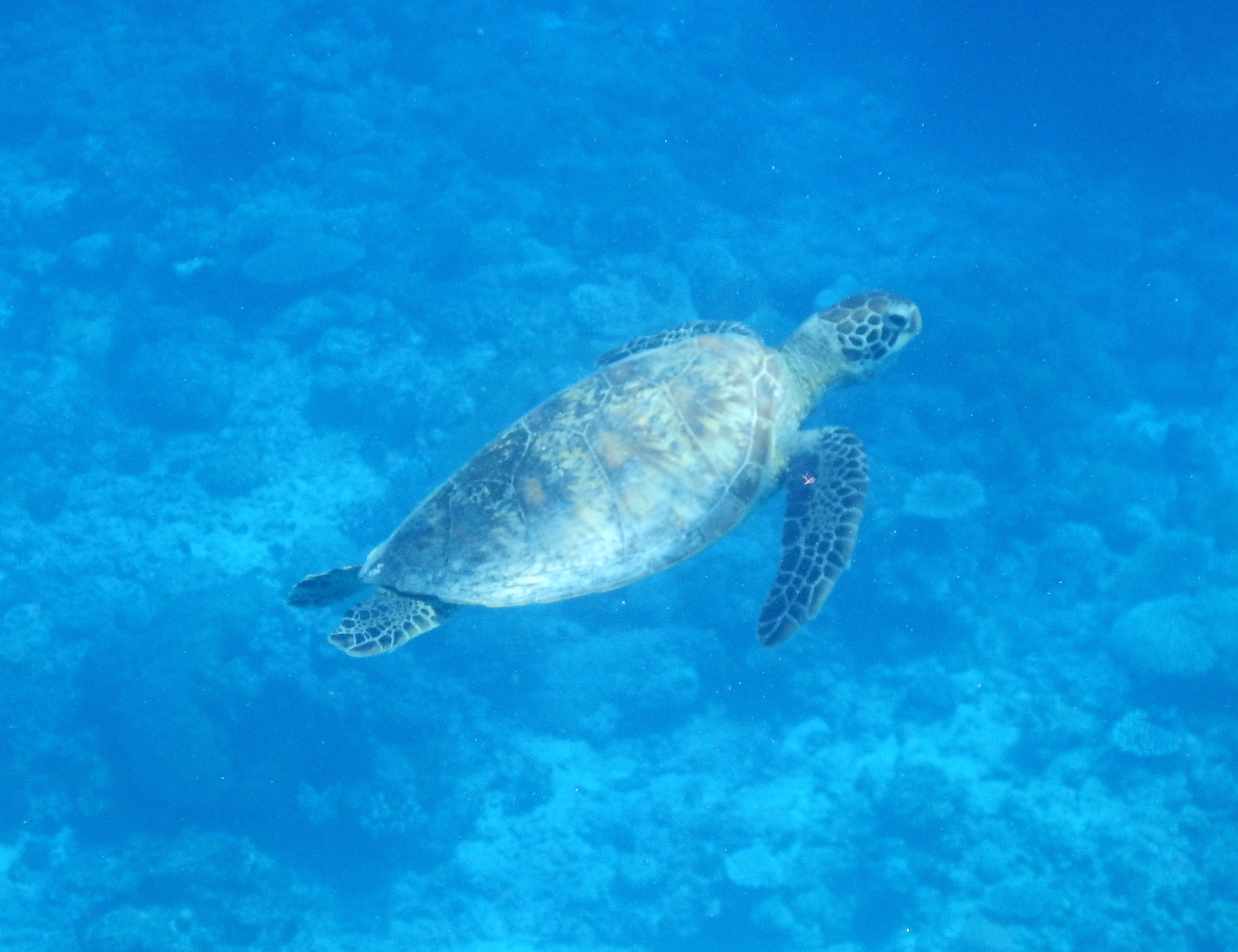
I have been snorkeling many times but NEVER seen a turtle and I was hoping this would be my chance. I was quite worried though because the guide said we would definitely see a turtle and so I told her that by saying that she had probably jinxed me. She said that she’d draw me a turtle if I didn’t see one. Luckily for her we had a wonderful encounter with a sea turtle that we found foraging on Sea turtlethe sea floor and then surfaced near me to take a breath. Simply magical!!! Graeme also did a few scuba dives, including a night dive which he thoroughly enjoyed!

No need for words…I’ll let the photos do the talking. Click here to see our photos on Flickr.

Merry merry king of the bush is he

Standard

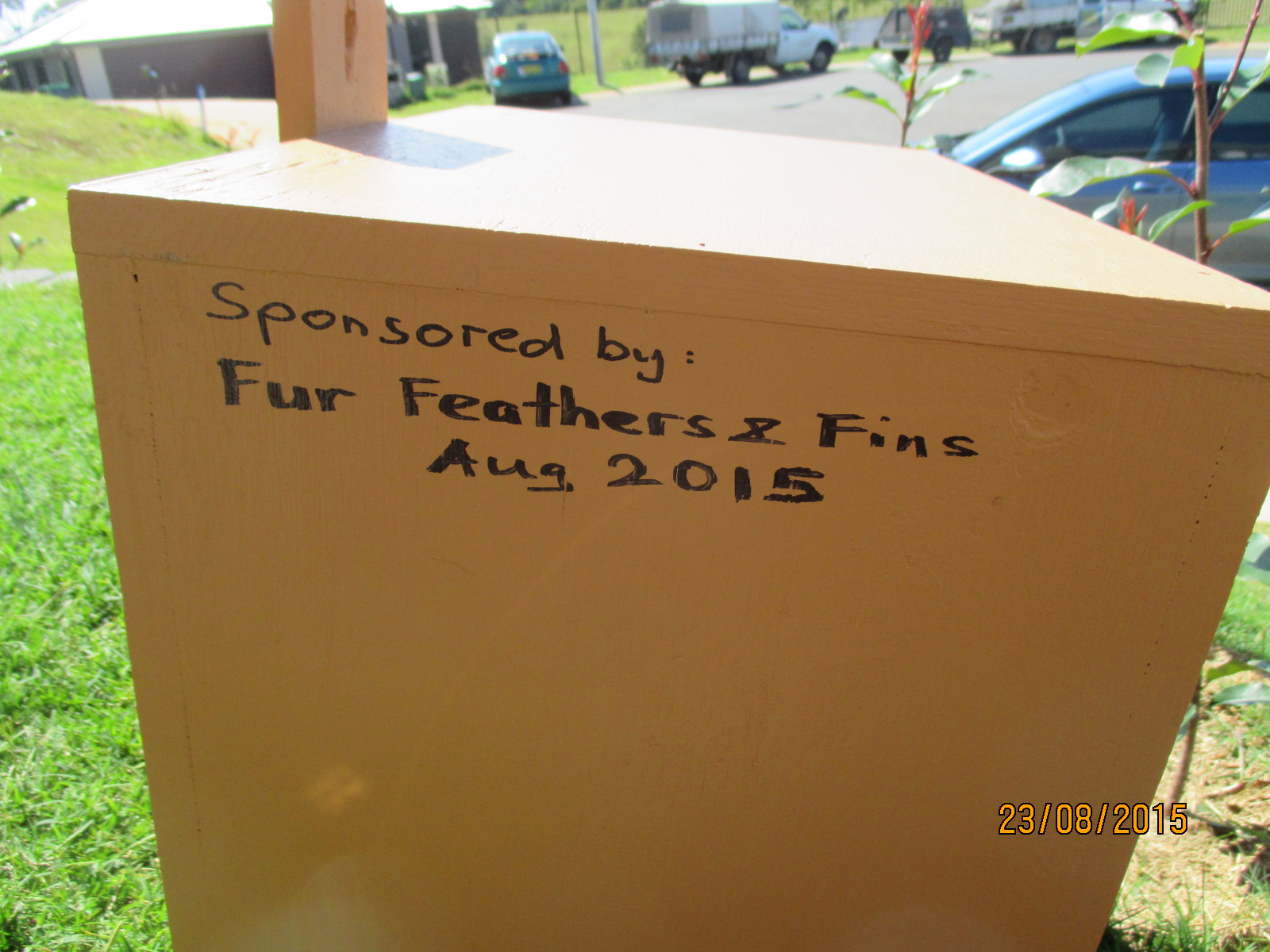
During our visit to their new home in Wollongbar a few IMG_1462 painted and ready to installweeks back, Jakob and Julie were lamenting that they could no long watch a pair of kookaburras nesting in their tree Kooka box FFFyear after year as they previously did at their old property in Lismore. Jakob wanted to place a nest box in a gum tree in the paddock opposite his house. As a little thank you present for hosting us, we bought them a kookaburra nest box to place in the tree.

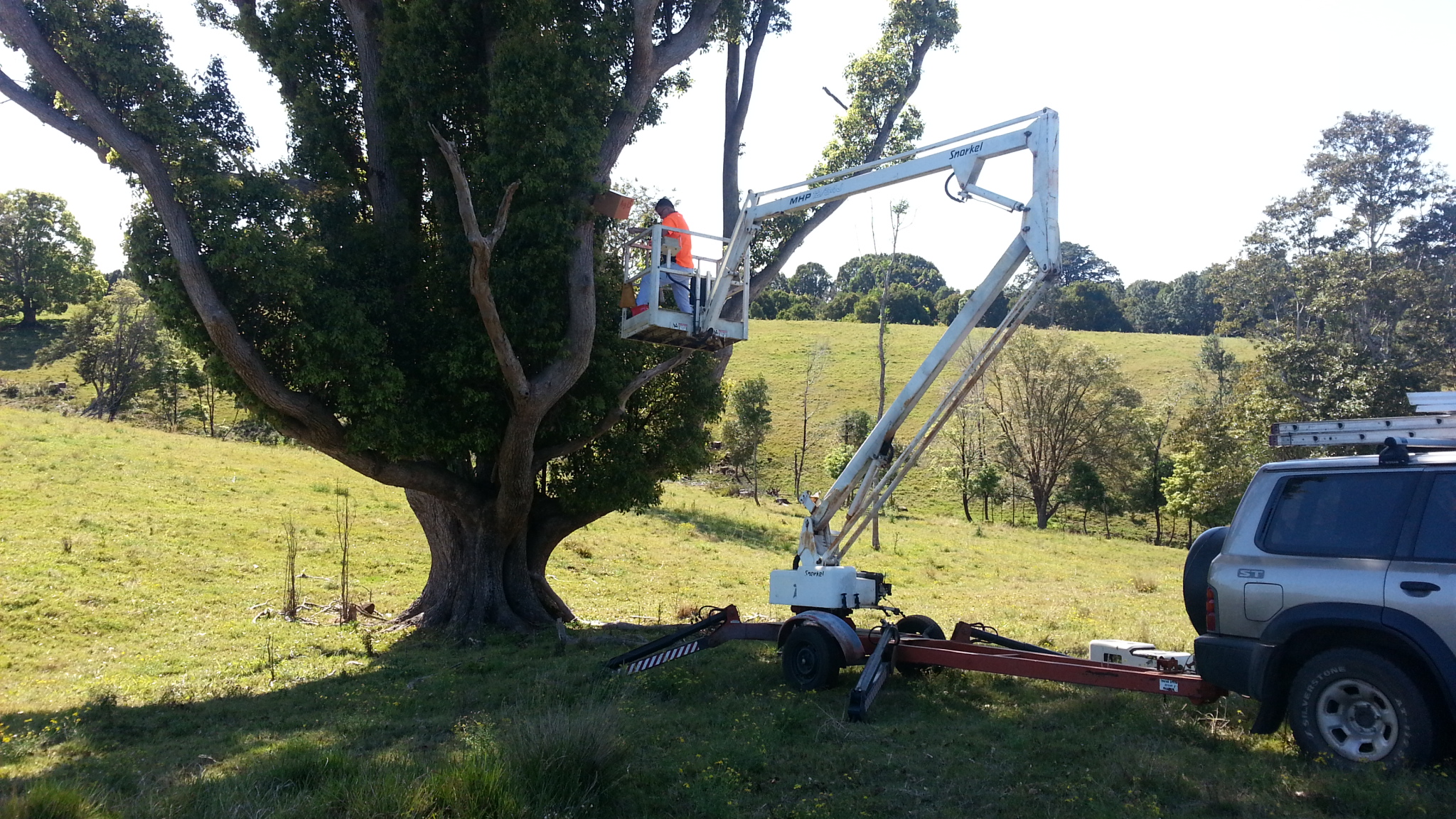
Jakob was not sure how the neighbours would react or how he was actually going to place the box high enough in the tree, but as it turned out the whole community got on board. Many people on the street attended the installation event and a local friend of Jakob’s helped install the box using his cherry picker. Even the Kooka box installationlocal newspaper (read online article here) and local birding group showed up for the event! Since installation, a kookaburra has been seen sitting near the next box, so fingers-crossed for some kookaburra chicks this season.

Northern star kooka story

Going batty for bats

Standard

Where: Tolga Bat Hospital in the Atherton Tablelands

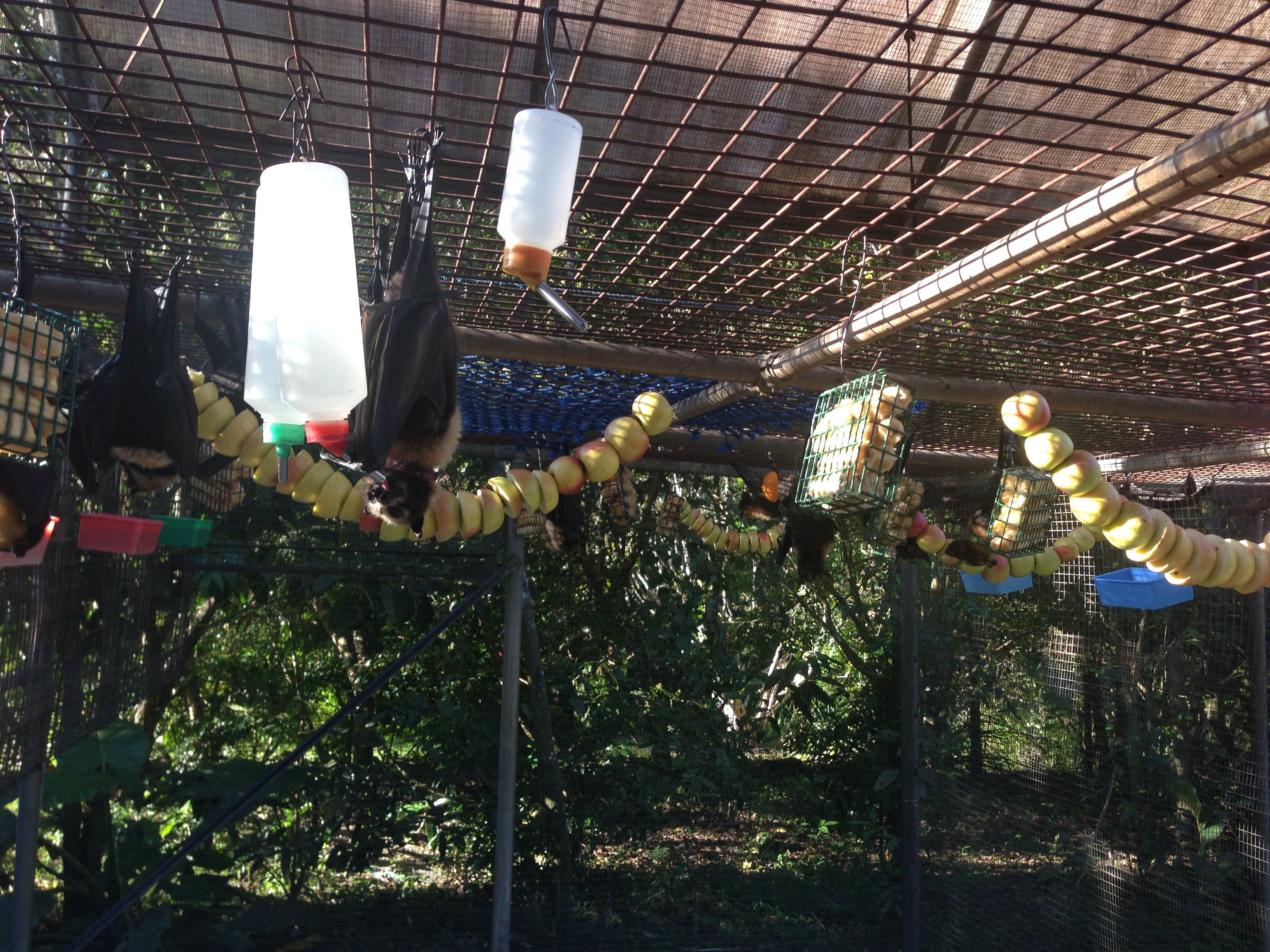
IMG_1459Graeme and I have both worked with bats in Australia and New Zealand so I was very keen to check out the Tolga Bat Hospital. During our visit I was pleasantly surprised to see such great facilities for care and rehabilitation of injured or orphaned bats.

Bats have got a bad rap in the eye of the public: they are considered pests by fruit farmers or when they roost near people because of the noise and smell, and they are known to carry diseases that have the potential to infect humans such as Lyssavirus and Hendra virus in Australia and Ebola virus and IMG_1457Nipah virus overseas. But I am here to tell you that bats are a very important part of any ecosystem because they aid suppression of insect populations, dispersal of seeds, pollination and recycling of nutrients in the ecosystem. If you ever get to meet a bat you will hopefully see they are not as scary as you may think and may even begin to appreciate them as cute little creatures.

Many bat species in Australia are in decline and this is solely due to human activity. Destruction of their habitat is the number one threat to bats, and as they move into human populated areas they are vulnerable to shooting by fruit farmers, getting caught in barbed wire fencing or inappropriate fruit tree netting IMG_1447and electrocution. The hospital at Tolga cares for 1000’s of orphaned and injured bats each year (I can’t remember the exact number but was definitely A LOT!) with the aim of releasing them back into the wild.

As for the diseases found in bats in Australia (Australian Bat Lyssavirus and Hendra virus) that have the potential to infect humans, there is absolutely no need to go around culling/killing bats in order to minimise transmission to humans. Australian Bat Lyssavirus has similar properties to the Rabies virus and therefore vaccination with Rabies vaccine protects humans from infection with Lyssavirus. All people who work with bats are required to have the Rabies vaccine (as Graeme and I have). As for Hendra virus, the bat first needs to infect a horse and only then are humans able to become infected. Humans cannot be infected with the DSCN1669virus from coming into contact with a bat. Besides, there is now a Hendra virus vaccine for horses so the risk of transmission from horses to humans is minimal in a vaccinated horse (be wary of those who have the opinion that the vaccination is dangerous in horses – there is no actual evidence to support this. Opinion is very different to evidence – don’t get me started!).

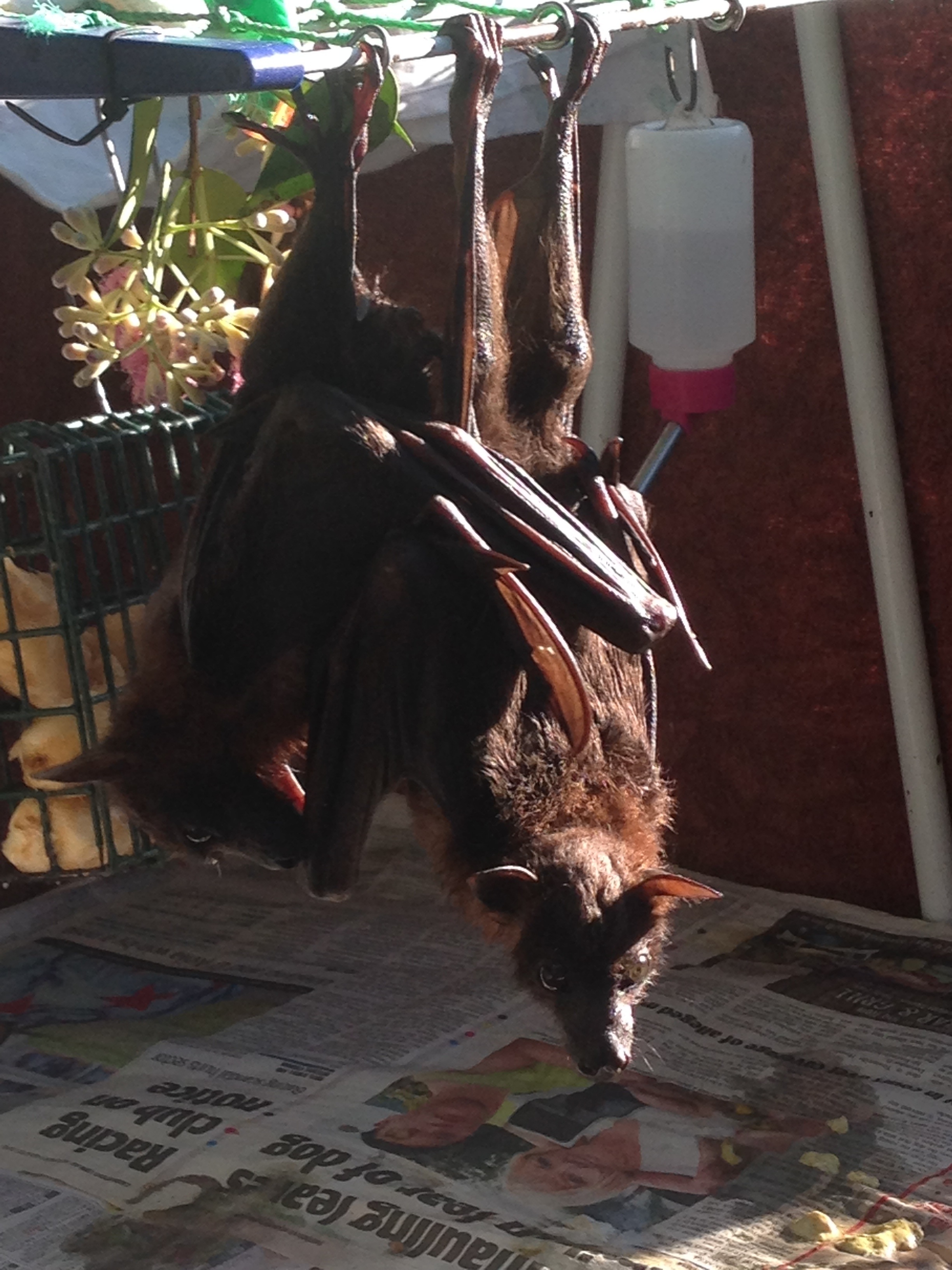
We were given a tour of the facilities at the hospital and got to meet many of the current patients including this cute juvenile Spectacled flying fox who tried to steal my hat!